Suffering Bastard — Rum Variation
Serves 2 small drinks · 5 minutes · Two small rocks glasses
Last updated 1 November 2026
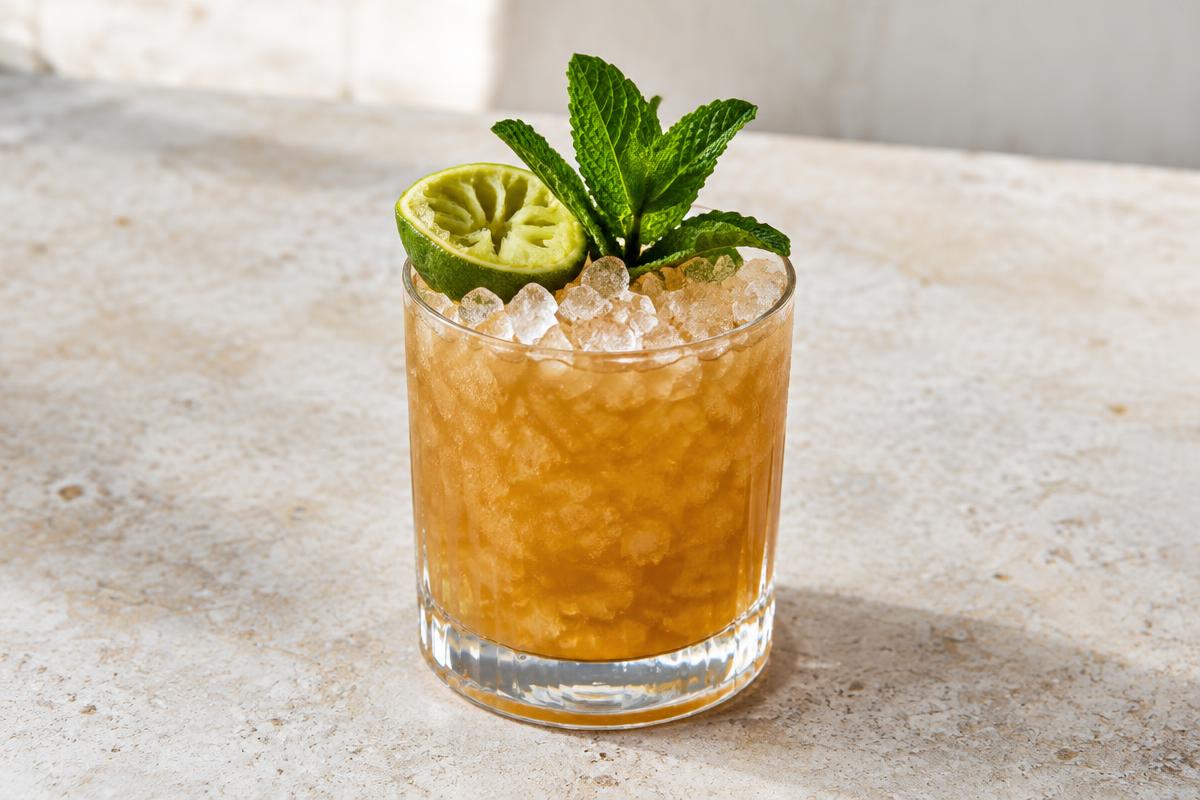
The original Cairo Suffering Bastard is not a rum drink. This is a measured house interpretation of the later Trader Vic rum variation, documented in a secondary transcription attributed to his 1968 Pacific Island Cookbook. The original text gives dashes and a whole lime rather than complete millilitre measures, so our choices are explicit and are not a validated historic specification.
Ingredients
- — 60ml dark rum (40% ABV assumed)
- — 30ml light rum (40% ABV assumed)
- — 1ml orange curaçao liqueur (40% ABV assumed; house interpretation of one dash)
- — 1ml almond orgeat (house interpretation of one dash)
- — 1ml rich sugar syrup (2:1; house interpretation of rock candy syrup)
- — 30ml fresh lime juice (house starting measure for the source’s whole lime)
- — Crushed ice for shaking and serving
- — Washed lime shell and mint, optional garnish
Method
- Measure both rums, curaçao, orgeat, syrup and lime into a shaker. Use a graduated small-volume measure for the 1ml ingredients, not an unmeasured splash.
- Add crushed ice, seal the shaker and shake briefly until chilled. This conventional shaker method replaces the source’s glass-and-metal-shaker technique.
- Divide the entire mixture and ice equally between two small glasses, topping each with fresh crushed ice as needed. Add optional lime shell and mint; no extra rum or ginger beer is added.
The classic vs the spiced version
Webtender attributes the two-to-one dark/light rum formula, three dashes and whole lime to Trader Vic’s 1968 cookbook. We have not inspected the original book; the measured dash, lime, syrup concentration, shaker technique and two-serving presentation are house adaptations needing tasting confirmation. For a further spiced version replace the 30ml light rum with 30ml Dilay, not an additional pour. Dilay is our own sipping and mixing rum, not an ingredient claimed in the historical text.
Tips for getting it right
- — The historical transcription is not a full measured specification. Our 1ml dash choices, 30ml lime and 2:1 syrup are working interpretations needing taste-and-balance testing, not exact conversions.
- — Orgeat contains almond. Check labels and allergies; a dash is still an allergen-bearing ingredient.
- — The full batch contains 90ml rum plus curaçao. Divide it equally into two; the unit figure is per small serving.
- — Do not call this a hangover remedy or confuse it with the original gin-and-brandy drink. This version has no ginger beer.
Related serves
Related recipe: Mai Tai
Related recipe: Navy Grog
Frequently asked questions
Is the original Suffering Bastard rum-based?
No. The Cairo drink is associated with gin and brandy or bourbon, lime, bitters and ginger beer. This page identifies the later Trader Vic-style rum branch, not that original.
Are the dash volumes historically verified?
No. The secondary source gives dashes and a whole lime. Our 1ml measures, 30ml lime and syrup concentration are explicit house choices needing tasting confirmation; they are not a claim of Dilay or publisher validation.
Dilay 1949 is our own spiced rum, for sipping as well as mixing. Any substitution described above is a maker’s adaptation, not part of the credited specification.
BUY DILAY 1949 PANJABI SPICED RUMRecipe references
- Webtender: secondary transcription attributed to Trader Vic’s Pacific Island Cookbook (1968)
- Liquor.com: original Suffering Bastard and later rum variants
Our method and spiced adaptations are described separately from the referenced classic specifications.
Approx. 1.82 UK units per serving from the measured alcoholic ingredients. Where a source gives US fluid ounces, our rounded conversion uses 30ml per ounce. Stated strengths are calculation assumptions, not verified specifications for every bottle. Bitters use an explicit house measure of 1ml per dash, not a universal dash conversion. Check all labels; dilution does not remove alcohol.
Please drink responsibly. 18+. Visit drinkaware.co.uk for the facts.